Whoa! I was digging through my browser wallets just last week. Something felt off about the UX and permission prompts. Initially I thought it was just another extension, but after trying a few transactions on testnets, my instinct said there was a cleaner approach hidden in the noise. Here’s the thing.
Seriously? Rabby is a browser-based Ethereum wallet with a focus on DeFi flows. It splits the difference between safety and convenience for active traders. On one hand it keeps the usual key management under your control, though actually the nuanced permission controls and transaction simulation tools are where it starts to feel much more deliberate, especially compared with older browser wallets. My instinct said this felt useful almost immediately in daily use.
Hmm… It shows a preview of contract calls before you confirm them. That little UX tweak prevents the usual «oops» trades I see people make. Initially I assumed the simulations were just heuristics, but after comparing a failed swap and examining the raw calldata and revert messages, I realized the simulator often flags subtle slippage patterns that would otherwise eat funds. I’m biased toward wallets that tell you why a tx might fail.
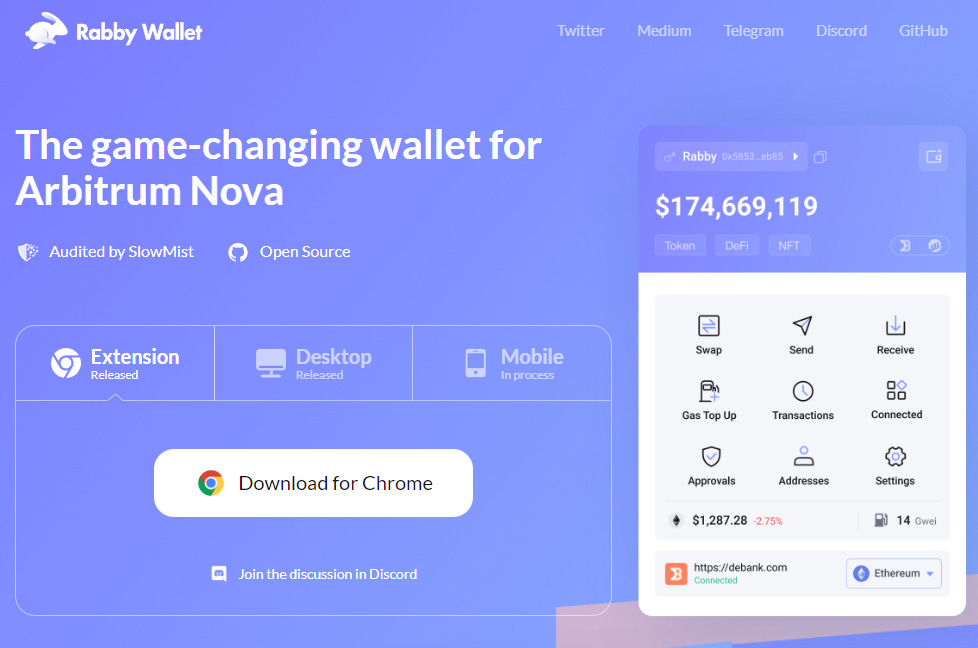
Getting started (and a quick download tip)
Wow! For a direct rabby wallet download, use the official extension link to avoid impostors. Install it, set a secure password, and back up your seed phrase offline. On one hand that sounds like the same old song—backup your seed always—but on the other hand the wallet’s clear prompts and hardware-wallet integrations actually reduce mistakes when you start doing complex DeFi ops. I use a hardware wallet for large holdings and connect it via Rabby.
Hmm. I’ve had one hiccup with network switching that required a quick reinstall. The team responded on Discord, but the fix wasn’t instant. Initially I thought that meant instability, but after tracking version histories I realized the problem stemmed from permissions left by older wallet installs and a stale RPC cache, which is an edge case yet plausible for power users. So yes, keep extensions tidy and clear caches once in a while.
Here’s the thing. Rabby focuses on active DeFi users rather than casual HODLers. It offers multi-account management, quick switching, and per-site permissioning. Though actually, on-chain privacy isn’t magically solved; the wallet helps reduce accidental approvals, but your address clustering and on-chain footprints still reveal links between your positions if you don’t use separate accounts and privacy tools, so plan accordingly. If privacy matters, use separate accounts or mixers where appropriate.
Really? I’m cautiously optimistic about smart wallet UX improvements like these. Rabby won’t fix every problem, but it reduces the common ones. In the end, my takeaway is that a wallet that explains transaction payloads and simulates outcomes moves the needle for people who trade frequently and want lower friction while keeping custody, though it also demands a bit more attention from users who must make security choices. Try it, be careful, and maybe avoid doing very large swaps until you test flows.
FAQ
Is Rabby safe to use for large amounts?
Short answer: not by default. Use a hardware wallet for large balances. Also, split funds across accounts if you’re worried about address linking. I’m biased, but this is the practical approach.
Does Rabby work with other chains and L2s?
Yes, it supports Ethereum mainnet and many layer-2s and EVM-compatible chains. However, RPC settings and custom networks can be tricky—check those twice. Oh, and by the way… some bridges or dApps expect different approvals, so always preview the calldata.